

Most AI teams still source training data in silos: one pipeline for text, another for images, another for audio. That separation is where models start to break down.
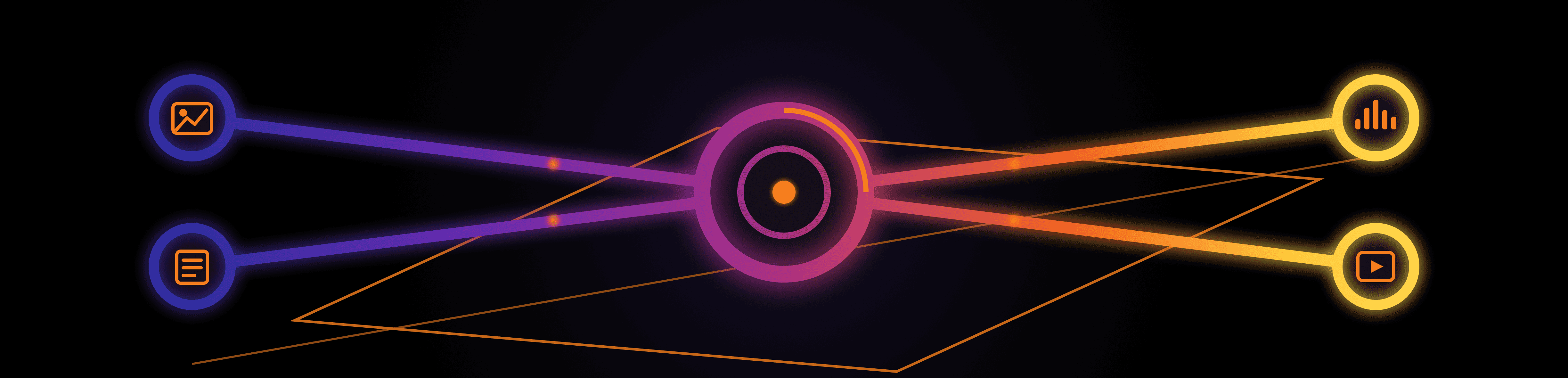
Multimodal data connects what is seen, heard, written, and spoken within the same context. A video clip only becomes useful training data when its transcript, speaker labels, scene descriptions, and metadata are aligned with it. Without that alignment, you have files, not a dataset.
Wirestock sources data across visual projects daily. This guide draws on that experience to explain multimodal data and what AI labs and teams should know before sourcing it.
What Is Multimodal Data?
Multimodal data is any data that combines two or more modalities: image, video, audio, text, 3D, sensor data, or metadata. The term covers a wide range, from a photo with a caption to a street scene video annotated at the frame level.
A useful distinction for AI teams is between raw multimodal files and training ready multi modal data. A video with sound is multimodal. So is a product photo with alt text. But neither is ready for training without cleaning, rights clearance, labeling, and alignment to a specific model objective.
Training-ready examples where each element has been prepared to work with the others :
Image + human-written caption
Voice recording + transcript + speaker attributes
Video + synced audio + full transcript
Product photo + structured metadata + written description
Street scene video + frame-level labels + object annotations
Creative asset + prompt + human preference ranking
Multimodal Data vs. Unimodal Data
A text-only dataset teaches a model language. An image-only dataset teaches it to recognize objects. An audio-only dataset teaches it to process speech. Each works within one format, which means the model has no way to connect what it learns to anything outside that format.
That is the limitation unimodal training runs into. A model that only reads text has no grounding in what words refer to visually.
Why is Multimodal Data Important for Modern AI Models
Most production AI systems today work across more than one input type, and the training data has to reflect that. A model can only learn cross modal relationships if those relationships are preserved clearly in the data it trains on.
That is why alignment matters. More files does not mean better training if the connections between modalities are broken or inconsistent. The gap usually shows up when the model encounters inputs it was never properly trained to connect.
Why Multimodal Data Is Harder to Source Than Unimodal Data
The Modalities Must Match
Alignment is what separates usable multimodal data from a collection of files that happen to share a folder. Temporal alignment means audio lines up with the correct video moment. Spatial alignment means labels point to the right region. Semantic alignment means the text actually describes what appears. Any of these can break independently, and weak alignment is often harder to catch than missing data.
Each Modality Has Its Own Quality Standard
Quality control has to happen within each modality and across them. A file can pass every individual check and still fail as a training sample because the modalities do not hold up together.
Multimodal Data Creates More Failure Points
A unimodal dataset has a limited failure surface. Multi modal datasets compound that surface. Labels, file quality, modality correspondence, metadata completeness, and rights coverage can each degrade independently, and problems in one often mask problems in another.
Collection Requires More Coordination
More roles are involved, and each introduces interpretation. If the collection brief is vague or inconsistently applied, the dataset reflects that inconsistency at scale and it is difficult to detect after the fact.
Rights and Provenance Are More Complex
A single sample can carry rights obligations across several dimensions at once. Clearance standards have to account for every modality, not just the primary file format.
What Quality Looks Like in Multimodal Training Data
Image Quality
A dataset needs real world range across lighting conditions, compositions, and settings, with accurate labels and captions. Near-duplicates and overrepresented styles are a common problem in image datasets, particularly those sourced from stock libraries.
A model trained on 10,000 near identical polished images learns a narrow slice of visual reality, which shows up quickly when it encounters an input it doesn't recognize.
Video Quality
Accurate timestamps and annotations that reflect what actually happens matter more than footage quality alone. Broad action labels are rarely sufficient for video understanding. The dataset may need granular event-level or frame-level labels that capture distinct phases of an action.
Audio Quality
Clean studio audio and real world noisy audio serve different model objectives, and the procurement brief should specify which is needed. Speaker labeling, accent diversity, and timing accuracy all affect usability. Voice data also carries consent requirements that have to be addressed at collection, not after.
Text Quality
For multimodal training, useful text explains relationships, actions, context, or intent. A caption that restates the obvious without adding interpretive value contributes little to the training signal. Format and terminology consistency across the dataset matters as much as accuracy in individual samples.
Metadata Quality
Metadata is what makes a dataset searchable, auditable, and reusable. Incomplete metadata is one of the most common reasons a dataset cannot be adapted for a second use case or a different model objective. Make sure to clearly capture:
The source
Collection method
Consent status
Annotation approach
Known limitations
The Most Important Quality Factor: Cross-Modal Alignment
Individual file quality is necessary but not sufficient. The bigger question is whether the modalities agree with each other, and that is where most multimodal datasets have problems.
A transcript can be accurate as text but shifted relative to the audio. Labels can be technically correct but applied to the wrong moment. These errors do not always surface in quality checks that evaluate modalities separately.
The solution is to treat alignment as its own quality dimension, with its own review process. Modalities need to be checked against each other. How that works in practice depends on the modality combination and the model objective, which we cover in the sourcing section below.
Common Types of Multimodal Datasets AI Teams Source
Image-Text Datasets
The most widely sourced type, and the one where quality problems are easiest to overlook. Caption accuracy and label consistency drive what the model actually learns, and vague descriptions are far more common than they should be.
Preference rankings and prompt-response pairs push the dataset further, helping models understand how people interpret images, not just what those images contain.
Video-Text Datasets
Harder to source than image-text because temporal accuracy compounds every other quality issue. An annotation placed at the wrong moment in a sequence undermines the whole sample. Camera movement and scene transition context help here because the model needs to interpret what is happening across time.
Audio-Text Datasets
Clean studio recordings and noisy real-world audio are not interchangeable, and sourcing the wrong one produces a model that fails in the environment it was built for. Voice data also carries consent obligations that cannot be resolved retroactively.
Image-Video-Audio-Text Datasets
Every modality has to correspond to the same event, captured and annotated to the same standard. That level of coordination is difficult to achieve at scale, which is why this dataset type produces the most sourcing failures.
Human Feedback and Preference Datasets
A large set of inconsistent human judgments is less useful than a smaller set applied to a clear and defined rubric. Annotation consistency is what makes training datasets work, and it is the hardest thing to maintain as collection scales.
How AI Teams Should Think About Multimodal Data Procurement
Start With the Model Task
AI teams should define the model behavior before requesting files. The brief should say what the model needs to learn, which signals matter, and how the data will support that goal.
That decision shapes the dataset structure. A video understanding project, for example, may need timestamps, action labels, and frame captions. Other tasks will need different labels, metadata, and review standards.
Define the Dataset Specifications
Dataset specifications turn the model goal into a sourcing plan. They tell contributors and teams what each sample must include and how the final dataset should be judged.
A useful specification covers:
Required modalities
Labels and annotations
Metadata fields
Alignment level
Quality thresholds
Rights requirements
Review process
Delivery format
Clear specifications make it easier to reject data that has the right file type but lacks the structure needed for training.
Choose the Right Alignment Level
Alignment sets the depth of multimodal data integration. It defines whether the dataset connects files at a broad level or links specific moments, speakers, objects, captions, and annotations inside each sample.
AI teams should choose the alignment level based on the model task. Simple classification may only need broad labels. More complex behavior needs tighter links between the file, the annotation, and the exact moment or object being described.
Build Quality Gates Into the Workflow
Multi modal data needs quality checks throughout the collection. Teams should review file quality, annotation accuracy, duplicate content, rights status, and cross-modal alignment before final delivery.
This matters because a sample can look acceptable in parts and still fail as training data. A clear video and a clean transcript lose value if the transcript drifts from the speech. Early checks catch those issues before they spread through the dataset.
Plan for Coverage and Volume
AI teams should define coverage targets before collection starts. File count alone does not show whether a dataset reflects the real conditions the model will face.
Coverage may include settings, devices, lighting, languages, accents, object types, camera angles, or edge cases. The right mix depends on the product and deployment context.
Keep Provenance, Rights, and Versioning Visible
Procurement teams need to know where the data came from and how it can be used. That record is especially important with multimodal data, where one sample may include a person’s face, voice, surroundings, written text, and metadata.
Good documentation should make the dataset traceable. Teams should be able to see who created or collected the data, what permissions apply, how it was reviewed, and whether any part of it was synthetic or edited.
Questions AI Teams Should Ask Before Buying or Commissioning Multimodal Data
Many AI teams source multimodal data from specialized providers rather than building every dataset internally. Before choosing or commissioning AI training datasets, use this checklist to evaluate quality, alignment, rights, and fit for the model task.
What modalities are included?
Are the modalities aligned, or only bundled together?
At what level are they aligned: file, timestamp, frame, object, speaker, scene, or sample level?
Who created, collected, or contributed the data?
Are rights, consent, and usage terms documented?
What metadata fields are included?
Is the metadata consistent across the dataset?
How was the data reviewed?
What quality thresholds were used?
How are duplicates and near-duplicates handled?
Does it include enough variation across environments, subjects, formats, and edge cases?
Are known limitations documented?
Can the supplier explain the annotation process?
Can the supplier support multimodal data annotation beyond basic labels?
Can the supplier create custom data if existing files do not fit?
Can the supplier support updates, corrections, or new collection rounds?
How to Evaluate a Multimodal Dataset Before Training
AI teams should review a multimodal dataset before it enters training. Delivery checks confirm that the files arrived. Dataset evaluation confirms that the data can support the model task.
A useful review should check:
Completeness: Every required modality is present.
Accuracy: Labels, captions, transcripts, and metadata are correct.
Alignment: The modalities describe the same subject, action, moment, or context.
Coverage: The dataset reflects the environments, categories, languages, and edge cases the model will face.
Balance: No category, style, source, or condition dominates the dataset in a way that weakens performance.
Noise: Files are not corrupted, duplicated, blurry, unreadable, or unusable because of poor audio or visual quality.
Rights and provenance: The source, usage status, permissions, and review history are clear.





What does it mean if a dataset is multimodal?
What is an example of multimodal data?
What is a multimodal approach in AI?
Can synthetic data be multimodal?